Quick answer
There is no blanket rule that all wet carpet can be saved. Separate a clean-water leak from outdoor floodwater or sewage, and ask about every layer. Materials that cannot be cleaned and dried promptly may need disposal; extraction alone does not answer the retention question.
Start with the water history
Write down what entered the room, when it was noticed and whether the source is known. Ask the provider to explain the assumptions in its cleaning proposal. If the source is uncertain, say so. Choosing a process from the carpet’s color or smell would leave that important uncertainty unresolved.
When carpet may not be a cleaning job
CDC advises discarding belongings such as carpet and padding when they cannot be cleaned or dried quickly after a disaster. EPA also notes that floodwater may carry sewage or chemicals. Tell the provider about that exposure instead of treating flood-soaked carpet as an ordinary household cleaning booking.
Ask about the carpet, padding and subfloor separately
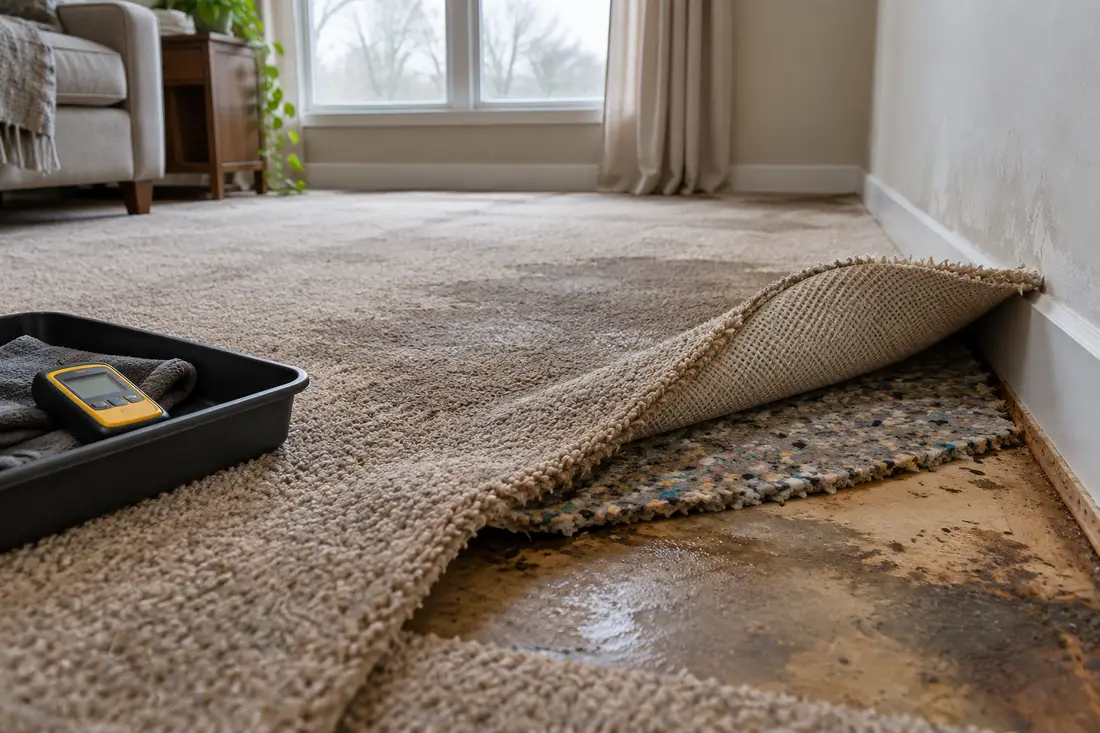
EPA’s clean-water table distinguishes prompt carpet drying from checking the subfloor beneath it. Its clean-water scope matters. Ask for an itemized recommendation for each layer, including any removal, cleaning, drying or replacement. Do not assume that saving the upper carpet means that every underlying component can remain.
Sources: [3]
A comparison checklist for the estimate
Ask competing providers to describe the same affected area and layers. You can then compare the proposed scope rather than comparing a carpet-cleaning total with a broader restoration quote. Request written answers to the questions below. They are a planning aid, not a certification that a material is salvageable.
- Which water-source assumptions does the quote use?
- Is the carpet proposed for cleaning, investigation or disposal?
- What is proposed for the pad and the floor beneath it?
- Who records the condition before anything is removed?
- Which visits and disposal charges are included?
- What evidence will support installing replacement flooring?
Document decisions without delaying safety measures
EPA recommends contacting the insurer and photographing damaged property before cleanup when it is safe to do so. Keep an item list and ask what records are needed before disposal. Do not enter an unsafe room merely to obtain a picture. The insurer’s documentation process and the provider’s material decision are related conversations, but they are not the same decision.
Sources: [2]
Before agreeing to save a valuable rug
Describe any special material, sentimental importance or existing damage when you ask for a specialist opinion. Request the proposed method, cost and limits in writing. This article cannot determine whether a specific rug can be restored. If the answer is uncertain, ask the specialist to explain the uncertainty rather than treating a promise of cleaning as a guaranteed result.
Questions you may have
Does water extraction prove that carpet is safe to keep?
No. Ask about the water history, whether effective cleaning and drying are feasible, and what is proposed for the backing, pad and subfloor.
Should the estimate include replacement flooring?
Ask explicitly. Water removal, material disposal, drying and installation may be separately priced stages.
Sources & further reading
Official resources used to prepare this page. Their inclusion does not imply affiliation or endorsement.
Ready for a more informed conversation?
Use our checklist, understand the scope and confirm availability directly.
See connection options ↗